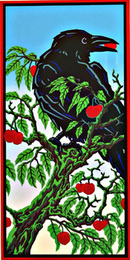
 Unlike a painter, each of the pieces in our booth takes at least a month to create and will take years to sell out. So many times at a show Steve and I will look at the booth of a fellow artist as he/she sells a large painting that we know may have taken as little as a week to create and wonder if we should rethink the medium of printmaking. One unlikely benefit for us however is that we spend a lot of time with our work. They take on a special connection as we spend every week explaining their meaning each week on the road. Many of the pieces come from photographs that we take during our travels or they could come from a composite of images that Steve has collected over time. However, every once in awhile there are certain pictures that have a special meaning to us. They come from a place of deeper meaning and they reflect a part of our lives that is marked in time. Recently we sold out of a such a piece of special significance and it seemed like a good time to share the life cycle of one of these pieces so I give you: The Life of "The Cherry Thief".
Anyone who has ever had to move during a traumatic time in their lives can attest there are always sights and sounds that connect us to those times. It can be the music that we listened to, the food we had to eat, the sight of the buildings around us. No matter how old we get we can still close our eyes and see, hear, or smell the very thing that reminds us of that time. Leaving the desert Southwest and moving to Seattle was probably one of those times for our children. In 1997, I was promoted and transferred in my job to Seattle from a small independent office in Flagstaff, AZ. My children had been living on 3 acres in the mountains with farm animals, a massive garden, and wide open skies. They were 9 and 11. For the first year we had rented a house in the middle of the suburbs of Seattle, surrounded by lots of houses. The first month it poured rain every day. There were lots of other kids around but they were still in school and so in the beginning our children were anything but happy. There was one glimmer of hope. The house had a tiny yard with fruit trees! My son was fascinated. Are there going to really be cherries in our backyard? Oh yes, we assured him, give it time but there would be cherries. It became his mission to watch the trees. Everyday the same question, the same response. As the cherries ripened his excitement grew. The other trees showed the promise of fruit but the cherries... Well, you all can guess the outcome of the story as the pesky crows had also been watching the trees as well and the day the cherries were ready, Nic woke up to see the cherries all gone. "The Cherry Thief "was created to memorialize the moment and made it's debut later that year. At the time Steve only did a few shows in the summer locally so he only sold a few pieces in the beginning. This piece turned out to be significant because it also was the first bird piece and began a series of successful wildlife pieces to come. Over the years as more wildlife work came along "The Cherry Thief" always stayed popular. It seemed to spark a feeling in people about a similar experience they might have had with crows. Ironically in recent years we began to see images of crows with cherries in various art forms at the many shows we do. We have even had people ask us if all the artists are doing the same thing for a reason. We get asked a lot about how long it takes for a piece to sell out and it really varies. These days we make very small editions and so it will not take as long as it did with "The Cherry Thief" where we made 40. This piece sold slowly but steadily until this past year and then it went a little crazy. We were asked last year to be included in an exhibition at the Portland International Airport on Printmaking. "The Cherry Thief" was there and we got calls constantly about it, selling quite a few of them. Like a lot of our pieces, there are times they just take off and everyone wants them. For that we are grateful. So it is ironic that a few weeks ago we closed the chapter on "The Cherry Thief". We still have one framed one and my heart says we should keep it. We left Seattle to move back to Arizona this year and closed that chapter too. Maybe we should sent the artwork to Nic. Then he will always remember the day the crow stole his cherries.  I think the number one question we get asked at every show is "Where are you from?" and yet in many ways it is a question that means nothing. You see we spend our lives on the road for the most part. When we come home we spend our time creating the artwork we display but the inspiration for the work itself comes from the times we spend far from the place we now call home. For many artists we get so little time to actually stay "home" that the question is always a jarring one. Home is a studio, a garage, an open space for building and creating and preparing for the next trip out the door. Does it matter in the big scheme of things where we are from or can the work speak for itself?
Many years ago we moved to Seattle because of a job transfer and now we are selling our house and planning to move back to Arizona. Will people stop buying from us in the Northwest once our address changes? Will more people buy in the Southwest when we do? Does it make the artwork look different based on where an artist is from, really? The artwork should speak for itself and it should be about how it makes the viewer feel, no matter where it is from. Do customers want to buy "local" and if so, do they understand that most artists would starve if they only did "local" shows. We love the places we visit and at many of the shows we do, we now have customers that we genuinely are excited to see every year just to say hello. We visit many places every year and as we travel to these locations we frequent some very beautiful locations along the way. We are so fortunate to have this luxury to be able to take in such inspiration wherever we go. We aren't from Utah, Oregon, or Texas but there are images in our booth from time we have spent there. So now that we will be from another new place, when people ask us "Where are you from?" we will answer differently but then we will look at each other, smile and know that really we are still the same people we were before we moved. 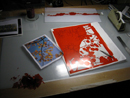 Every week that we set up the booth in a new city we look at each other and say the same thing. Will this show bring us visitors that know what a serigraph is? It will make a difference each week in what the show will mean for us by how many times we have to explain the process of making a hand printed screen-print but more importantly it will make a difference in how often we will have to defend the purchase of original printmaking. The increase into the marketplace of giclees has muddied the waters of the original printmaking world and it seems that it has become a real challenge to find a creative way to explain why someone would want a numbered "original" print that is not a reproduction.
If someone knows and understands the work that goes into making a hand cut and hand printed screen print then the reaction is usually quite wonderful and we know that they understand that they are buying a piece of art that will last a lifetime. In the meantime we continue to open up our binder of photos of the steps of the process and start the explanation again. Recently while talking with a fellow artist we shared this dilemma and he shared an analogy that I think we may continue using for awhile. The next time someone asks us where the "original" is and why the numbered pieces cost so much more than a reproduction I will share that a reproduction is like when you buy your first pieces of furniture in college. You may go to Target or Ikea and the furniture could be made of particle board with maybe some laminate cover on it but that's okay, you aren't planning to keep the furniture for long and it will serve its purpose for it's time just fine. But the fine hand crafted mahogany desk or bed that you decide to buy that you plan to have forever and to ultimately pass on to your children some day? Well, that's a serigraph. Original artwork is meant to hold on to and to cherish. Buy it for the feeling it gives you from the very first time you saw it and keep it until you are ready to pass it on to someone who will love it as much as you did. Invest in the real thing and if you have to do it in baby steps, that's okay because in the long run it will hopefully last you a lifetime. I have been a salesperson for as long as I can remember. I have sold at the highest levels of the corporate world where strategy means everything and the art of the negotiation is key. I wore the suit, flew on planes across the country, had lengthy "strategy" meetings and in the end when I was successful I couldn't tell you a thing about my clients real life. It was just not a key component to the sale in many instances and it didn't mean I wasn't good at what I did. Today I get to sell to people with no account plans, no forecasting but what I do get is an opportunity to share some wonderful stories and at the end of the day I feel like we truly do know something about each other when the sale is done. Some days the stories take on a very special significance and recently in Scottsdale that happened again for us. We used to live in Arizona when we were just starting out and some of the first pieces of art Steve ever sold were there to friends and acquaintances of his then mentor, a man who encouraged him to seriously pursue art as career. The pieces were sold for next to nothing since Steve was just happy to see someone wanted to have his artwork at all. Where these pieces ended up 25 years later we would never know, or would we? On Saturday a lovely couple came into our booth to look at our work. They loved the style of the work and remarked to each other how much it would blend with the pieces that they had been lucky to have found at an estate sale awhile back. The pieces that they had purchased had just been sitting in the house and not getting much attention but the colorful buffalo really caught their eye and after some time they were able to negotiate a price they could afford and bought it along with two smaller pieces. They had no idea who made the work but they loved the colors. Now they found themselves in our booth and it suddenly felt the same way it had when they were at the estate sale. The booth was fairly crowded but Ashley's mom walked over to a stack of greeting cards we had and when she turned over a box to see the price they were all stunned to see their buffalo looking back at them! They had found the artist of the mystery artwork from the estate sale! No wonder they liked this work so much and they all agreed to come back the next day. On Sunday they returned and we all proceeded to talk about the estate sale. I shared with them the story of our start there and how the work probably ended up there and I walked them over to show them that the Lonesome Bull of which only one remains is now the most expensive thing we have. The story brought back memories of Steve in his early years trying to start out doing this. The time we all spent together as they picked out two new pieces became a really special time for everyone. Their collection has grown, we have added new friends, and we now know that life has brought us full circle. Priceless..... 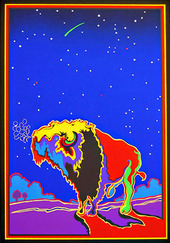
|
AuthorBonnie Harmston works side by side with her husband Steve and travels the art show circuit with him. Archives
December 2017
Categories
All
|
 RSS Feed